Introduction
The early 2000s were a genuinely iconic era in Black fashion history — a moment when Black women were not just participating in mainstream trends but actively defining them, leading them, and making them legendary. The influence of 2000s fashion on Black women’s style is something that cannot be overstated: from the velour tracksuits and door-knocker earrings of the early decade to the low-rise denim, bedazzled everything, and silk press hairstyles that defined its latter years, this era produced a visual language that is bold, unapologetic, deeply creative, and so richly influential that fashion in 2026 keeps returning to it again and again.
And right now, on Pinterest, on Instagram Reels, on runways from New York to Paris, the Y2K revival is in full swing — and Black women are once again at the absolute center of it, reinterpreting these iconic looks with a modern eye and a contemporary confidence that makes everything feel completely fresh and genuinely thrilling. This guide breaks down five of the most iconic 2000s fashion moments that Black women made legendary, and exactly how to bring each one back today in the most stylish, Pinterest-worthy, and culturally respectful way possible. Get ready to go back to the future.
1. The Velour Tracksuit: The Most Iconic Piece in 2000s Fashion for Black Women, Reimagined
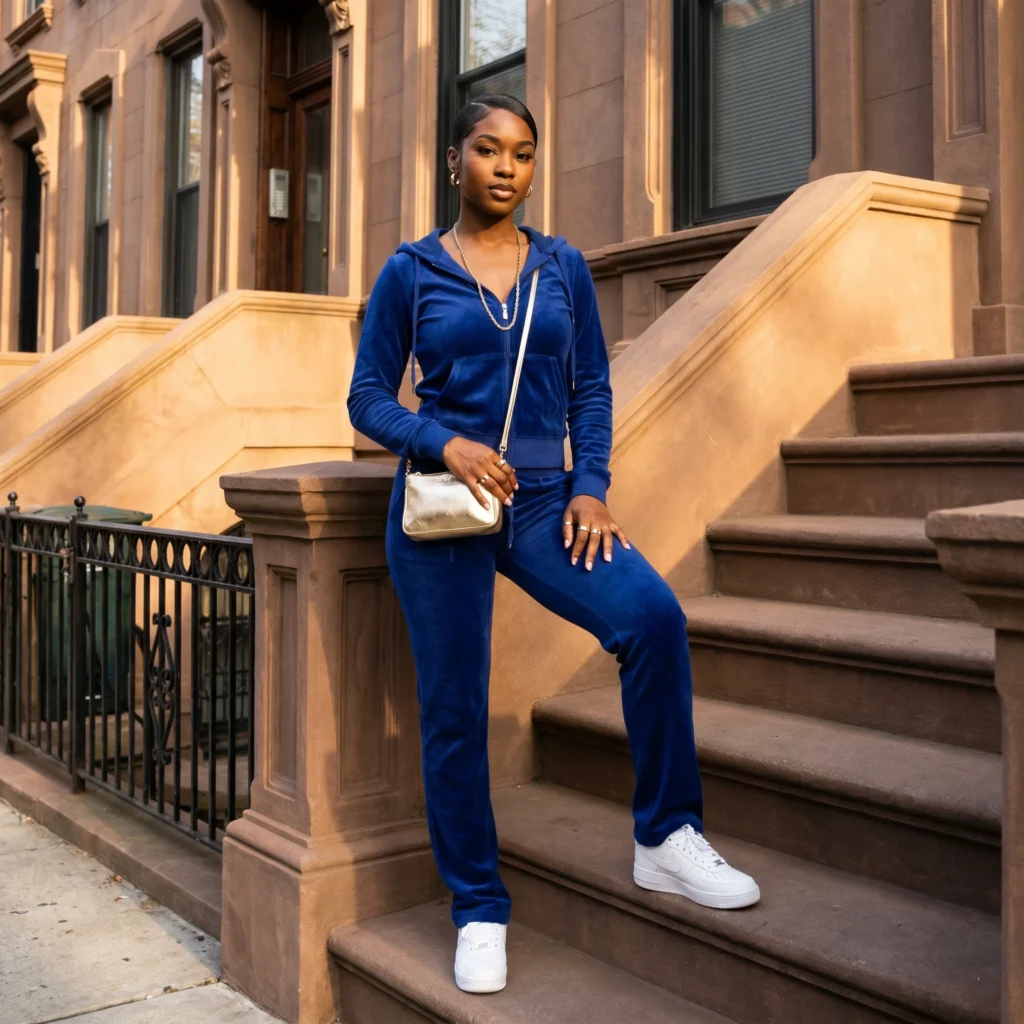
If you were a Black girl in the early 2000s, the velour tracksuit was not just an outfit — it was a whole lifestyle statement. Popularized by artists like Beyonce, Missy Elliott, and the entire Destiny’s Child era, the velour tracksuit in jewel tones and deep, saturated colors became one of the most recognizable and most culturally significant fashion items of the decade. In its 2026 revival, this iconic 2000s fashion staple has been upgraded without losing a single element of what made it so compelling in the first place. The velour is richer, the silhouette is slightly elevated, and the styling is more intentional — but the core energy remains exactly what it always was: confident, comfortable, and effortlessly cool.
Wear your velour set in deep burgundy, royal blue, forest green, or classic pink, and style it with fresh white sneakers or strappy heeled sandals depending on the occasion. Add a long gold chain, small hoop earrings, and a mini bag. Wear it with a matching silk scarf, a sleek bun, or a gorgeous silk press. The key to the modern version is wearing it as a real fashion piece rather than gym wear — with intention, with confidence, and with the full acknowledgment that this look is part of a rich, beautiful cultural legacy.
Styling Tip: For the most elevated, editorial version of the velour tracksuit revival, look for sets with subtle texture variation — a slightly different velour pile direction on the jacket versus the pants, or tonal embroidery along the collar. These small details are what separate a modern luxury interpretation from a basic costume shop version.
2. Baby Phat Energy: Low-Rise Denim and a Rhinestone Belt in 2000s Fashion for Black Women
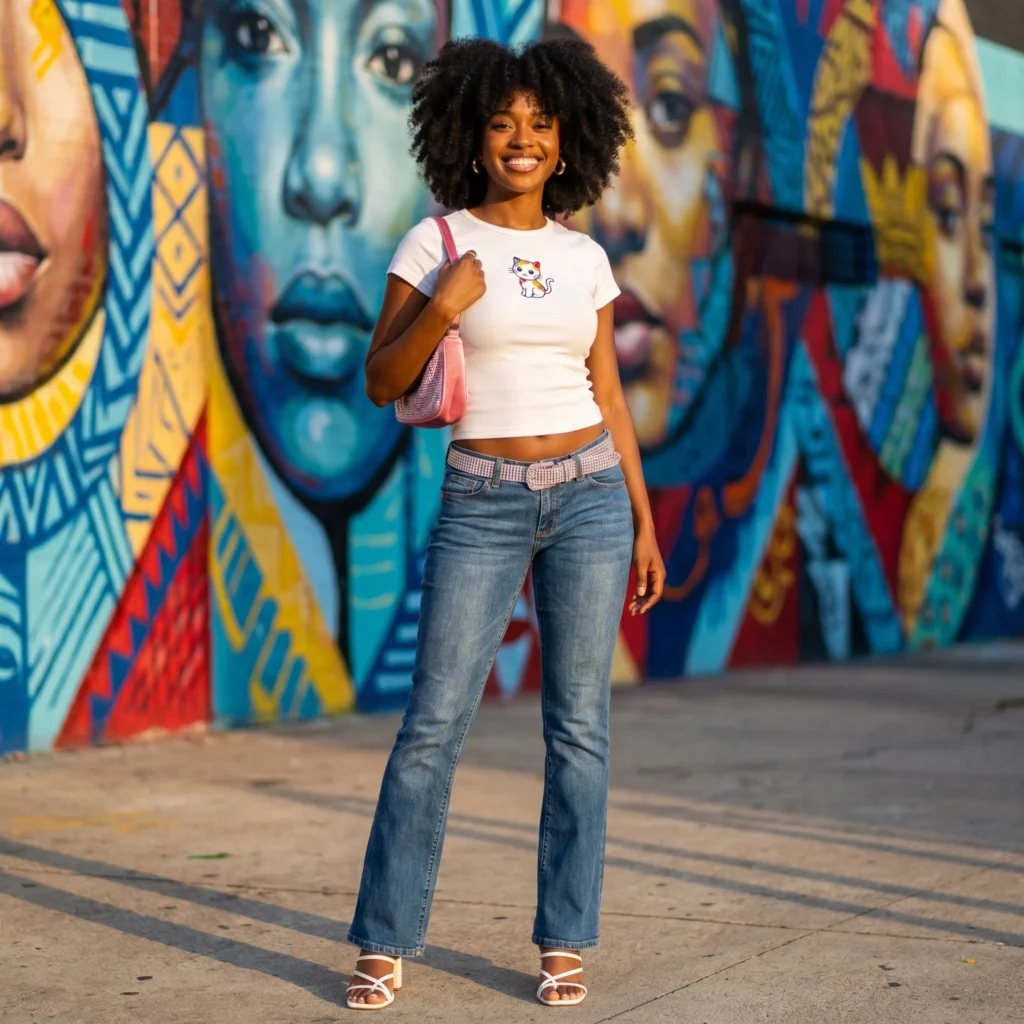
Baby Phat. Two words that carry the full weight of an entire era of Black girl fashion confidence. Founded by Kimora Lee Simmons, Baby Phat was not just a clothing brand — it was a declaration that Black women deserved luxury, glamour, unapologetic femininity, and fashion that was designed with their specific beauty and energy in mind. The signature Baby Phat look — low-rise flared denim, a fitted crop top or baby tee, a rhinestone or bedazzled belt, and a small designer-adjacent bag — is one of the most culturally loaded, most visually iconic silhouettes in the history of 2000s fashion for Black women. And right now, in 2026, this entire aesthetic is back with full force.
The modern version makes smart adjustments: the low-rise has been slightly modified to a mid-rise that still captures the Y2K silhouette without the practical challenges of a true early 2000s low, and the rhinestone belt is now treated as the intentional statement accessory it always deserved to be recognized as rather than an afterthought. Pair dark wash or light wash slightly flared denim with a fitted graphic baby tee in white or black, a rhinestone belt at the hip, small hoop earrings, and a mini shoulder bag. Baby Phat energy is self-assurance made tangible in fabric form, and it is absolutely stunning.
Styling Tip: If true low-rise denim feels uncomfortable for daily wear, look for jeans that are labeled “mid-low rise” — they hit about two inches below the natural waist, which recreates the Y2K visual silhouette with significantly more wearability and comfort throughout the day.
3. Coordinated Monochromatic Sets: The Underrated Power Look in 2000s Fashion for Black Women
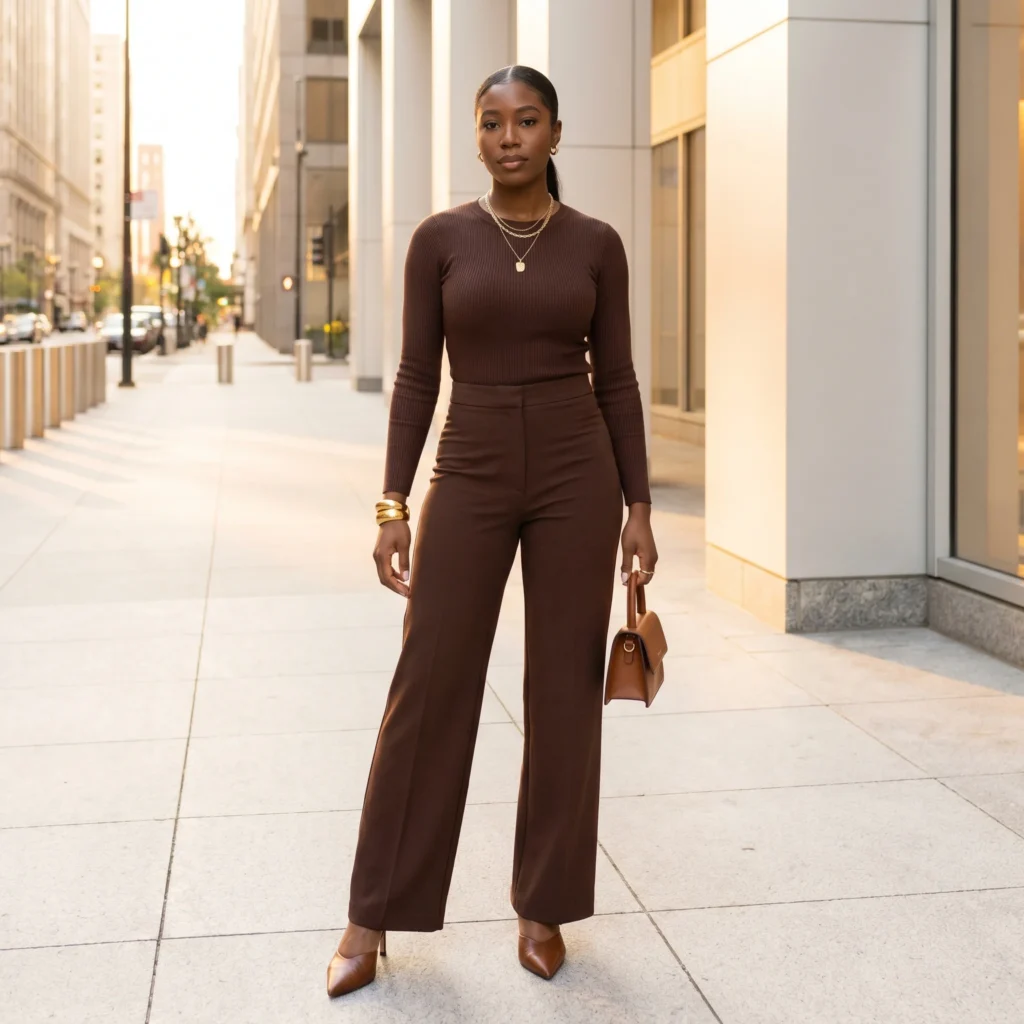
One of the most powerful and most consistently stunning fashion moves in early 2000s Black women’s style was the coordinated monochromatic set — the kind worn by Destiny’s Child on red carpets, by TLC in their iconic music video looks, and by every well-dressed woman who knew that matching from head to toe was not lazy styling but a masterclass in visual impact. In 2000s fashion, Black women elevated the coordinated set into something that felt simultaneously casual and deeply luxurious — a seamless column of color that emphasized the silhouette, created an elongating effect, and communicated a specific brand of effortless, deliberate confidence that monochromatic dressing has always embodied.
The 2026 revival of this look brings the coordinated set into the clean girl and old money aesthetics simultaneously. Think matching sets in chocolate brown, cream, cobalt, deep red, or all-white — two-piece sets with flared leg pants and fitted long-sleeve tops, or matching skirt and top combinations — worn with matching tone shoes and minimal accessories that let the clean, powerful silhouette breathe. This is the look for the woman who understands that simplicity executed with absolute precision is the ultimate form of fashion sophistication.
Styling Tip: When wearing a full monochromatic matching set, choose accessories that either precisely match your base color (cream on cream, white on white) or provide a clear, deliberate contrast — gold jewelry on brown, silver on white. A middle-ground accessory tone that does not commit to either matching or contrasting is what creates visual confusion and weakens an otherwise stunning look.
4. The Denim-on-Denim Moment: A Legendary 2000s Black Women’s Fashion Statement Made Modern
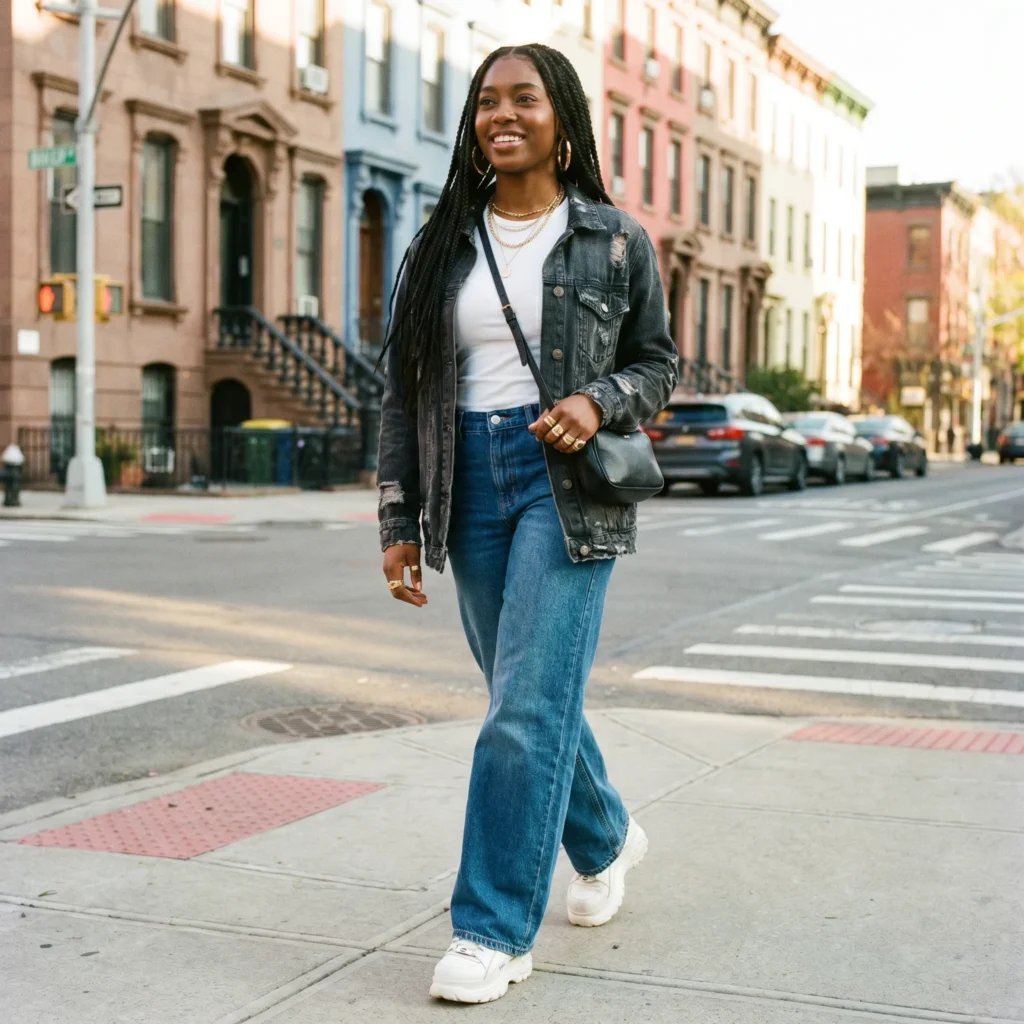
Few fashion moments from the early 2000s carry as much collective cultural memory and nostalgic power as the double denim look — and in Black women’s fashion specifically, it was executed with a particular boldness and creative flair that gave the trend its most memorable iterations. Missy Elliott’s music videos, the iconic moments from Black women on BET and MTV, and the street style photography of early 2000s Harlem, Atlanta, and Chicago all captured Black women doing double denim in a way that felt deeply intentional and utterly magnetic. The color combinations — light wash on dark wash, acid wash on indigo, matching denim sets with custom detailing — were fearless and completely visionary.
For 2026, the denim-on-denim revival is hitting just as hard, and Black women are once again leading the charge in terms of the most creative and most elevated executions of this trend. The modern approach pairs a fitted dark wash denim jacket with wide-leg medium-wash jeans, a simple black or white tee underneath, and elevated accessories — chunky platform sneakers, gold jewelry, a small crossbody bag. The contrast washing is intentional and deliberate: dark on medium, or acid wash on clean indigo. The denim itself is the statement, and everything else simply supports it.
Styling Tip: To make double denim look intentional rather than accidental, ensure there is a clear, visible difference in the wash of your top and bottom denim pieces. Identical washes worn together create a flat, confusing visual — strong wash contrast creates the editorial tension that makes the look genuinely compelling and Pinterest-worthy.
5. Bedazzled and Beaded: The Maximalist Accessories Era of 2000s Fashion for Black Women
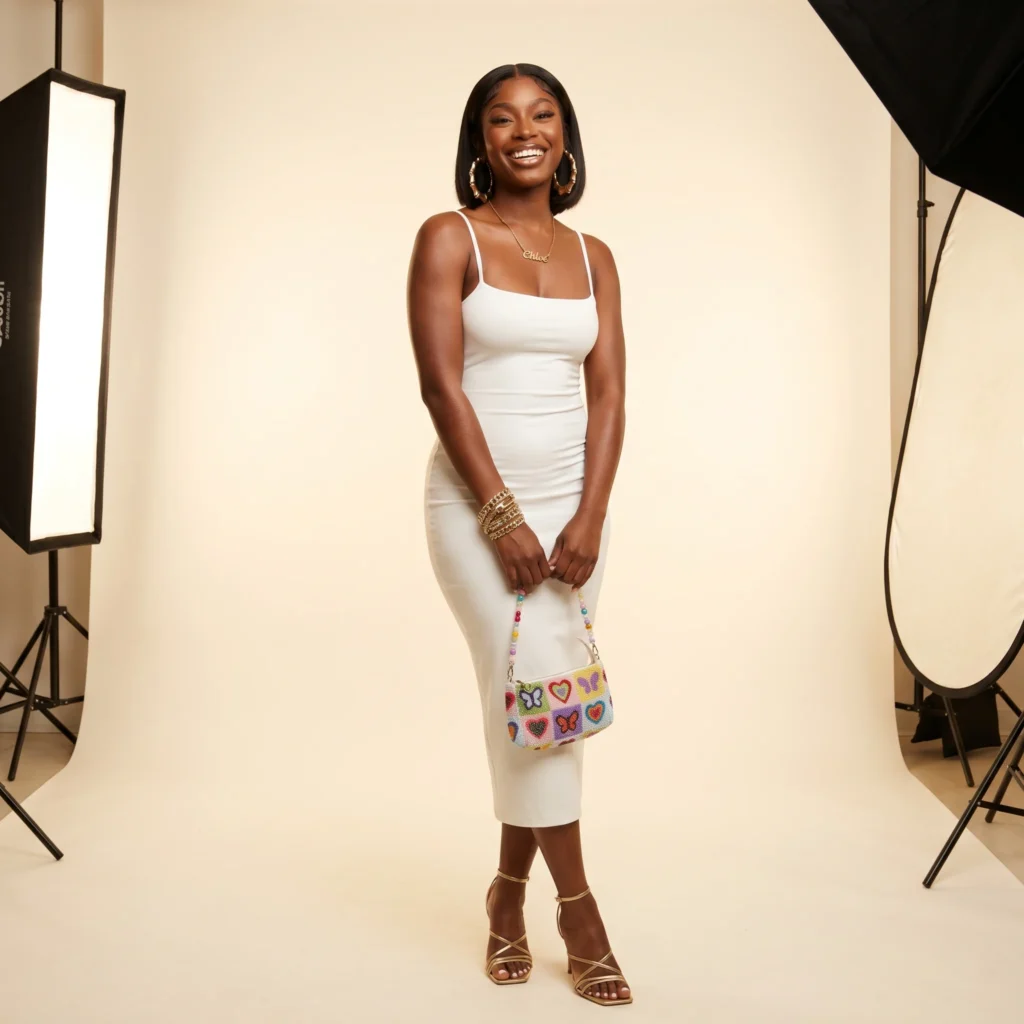
No conversation about 2000s fashion and Black women would be complete without a full, proper celebration of the accessories. The beaded bag. The rhinestone-encrusted phone case worn as a fashion accessory. The door-knocker earrings. The name-plate necklace. The bedazzled belt, the crystal-studded hair clip, the beaded bracelet stacked ten deep on one wrist. Accessories in early 2000s Black women’s fashion were not supporting players — they were the entire point, the exclamation mark at the end of every outfit, the element that communicated individuality, creativity, and a maximalist joy in self-expression that was purely, brilliantly, and unapologetically Black.
In 2026, the maximalist accessories moment is experiencing a full and glorious revival. Door-knocker earrings are back on every major fashion platform. Nameplate necklaces are being reinterpreted in contemporary fine jewelry. Beaded bags in Y2K color palettes are selling out season after season. The way to modernize this aesthetic is to choose one or two hero accessories and build them into an otherwise simple, clean outfit — a white fitted dress with door-knocker gold earrings and a beaded minibag, or a simple black monochromatic look with a nameplate necklace and stacked bracelets. Let the accessories tell the story while the clothing provides the clean backdrop that makes them shine.
Styling Tip: When incorporating maximalist accessories into a modern outfit, apply what stylists call the “anchor and accent” rule: anchor your look in a clean, minimal base (solid color, simple silhouette, neutral palette) and let your bold accessories be the single point of maximalist expression. This preserves the energy and joy of the original aesthetic while giving it a contemporary, editorial refinement.